
Cost vs Flexibility
Digital Audio has been part of our lives since the ’80s when CDs came out but has really taken off in it’s latest iteration for PA systems with Dante Digital Audio. Digital systems bring incredible flexibility and control and are now essential for large buildings.
Let’s discuss the pros and cons of each system.
Pros
Analogue
- Cheaper than Digital
- Easier to install
- Easier to maintain
- Widely Available
- Suitable for portable systems, small or temporary buildings
Digital
- Very Flexible
- High Sound Quality
- Advanced Audio Processing
- Remote Management
- Remote Configuration
- Wireless Control
- Programmable Pre-sets
- Routing
- Suitable for any size of building
Cons
Analogue
- Inflexible
- Difficult to configure
- Noisy
- Not suitable for complex routing
- No remote monitoring options
- No remote control
- Unreliable
- Not suitable for large buildings
Digital
- Can be Expensive
- Expertise required to install
- Expertise required to maintain
How do you choose?
In almost all cases you should choose a Digital Mixer. If you have a Medium sized building you could use just a Digital Processor for mixing, routing and control. A Large building would need a Digital Processor and may need a Digital Mixer as well. If you have a very small building, temporary venue or need a portable system you could choose an analogue mixer.
The Middle Ground
If you have a medium sized building both Analogue and Digital systems can work together. The cheapest way of getting remote control is to have a digital mixer. A Sound processor can also give more control and can be used by itself or with a digital mixer for added flexibility. A sound processor will allow you to have routing and remote control. Other digital components can be added as needed such as having digital snakes at the front of house and adding digital amplifiers.
What is a Sound Processor?
A Sound Processor processes audio using digital signal processors to allow complex audio processing and routing. Instead of having separate analogue devices we perform the same functions in a sound processor such as having an equaliser, compressor, expander, limiter, delay and routing.

This BSS Soundweb BLU-806 processor can take analogue and dante digital audio inputs and output both analogue and digital signals with the appropriate addon cards.
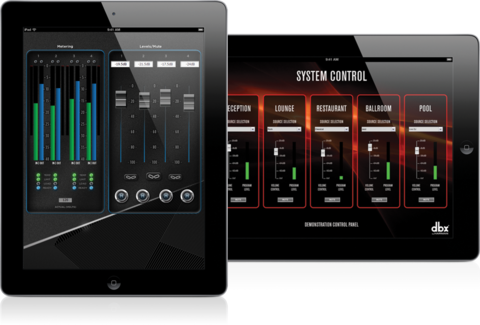
Additionally a sound processor can provide matrix routing which can be controlled remotely or wirelessly. Here we see an example of the Motion Control app for tablets which is part of the BSS Audio Architect ecosystem.
The above BSS Soundweb processor comes with Audio Architect configuration and management software which allows the audio designer to build audio processing blocks and routing specific to the venue.
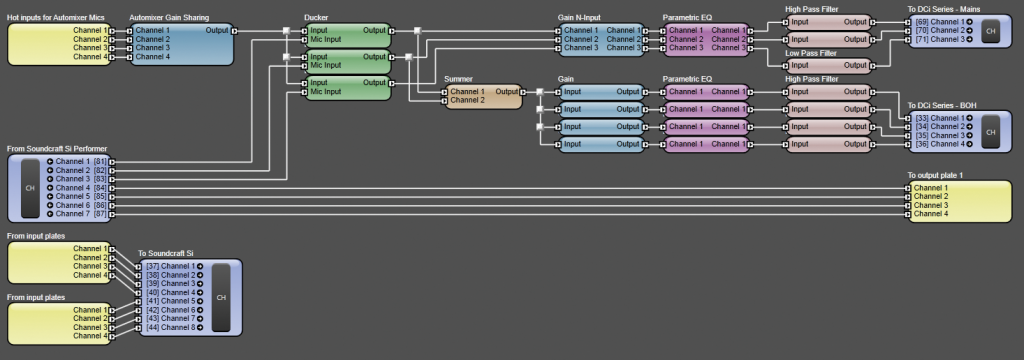
Here is an example of the processing you can do with Audio Architect. We can see processing modules linked together, with audio travelling from left to right, customised to the venue. Audio Architect also allows control over some other components such as Soundcraft Mixers and Crown Amplifiers.
Dante Digital Audio

Dante Digital Audio is fast becoming the industry standard for digital audio over other digital systems such as CobraNet and AES67. Digital audio can be sent using Cat6 ethernet cable and can be fed into network switches to enable other devices to talk to each other. Latency is very low and not noticeable.
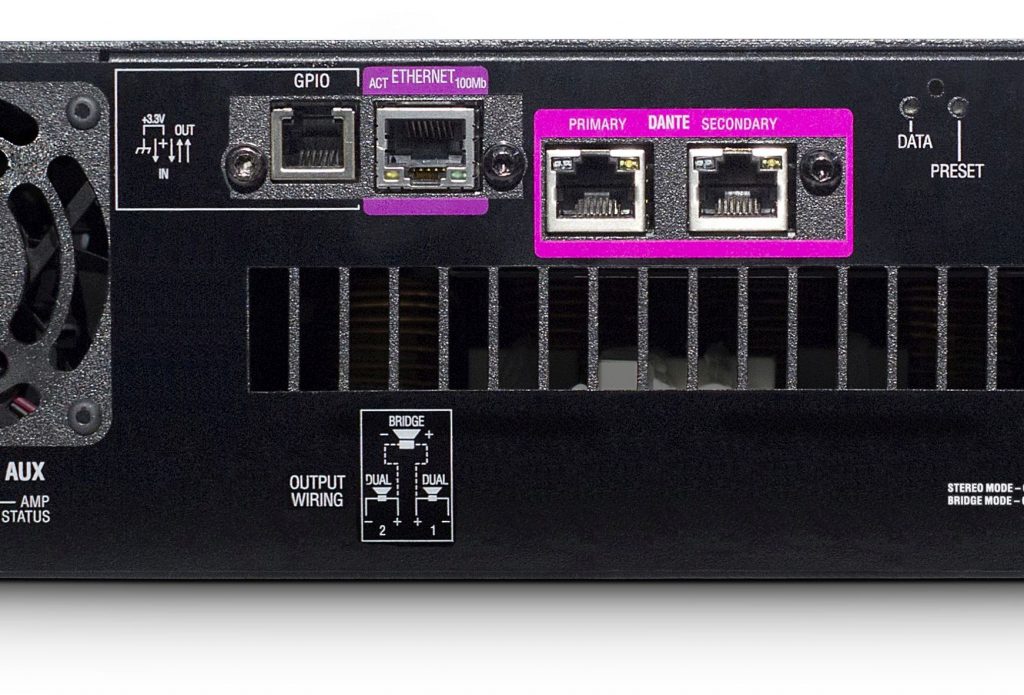
Dante Audio devices usually have two audio network ports for use in high availability or for connecting devices in serial. A control network port is also common to allow the device to be configured.
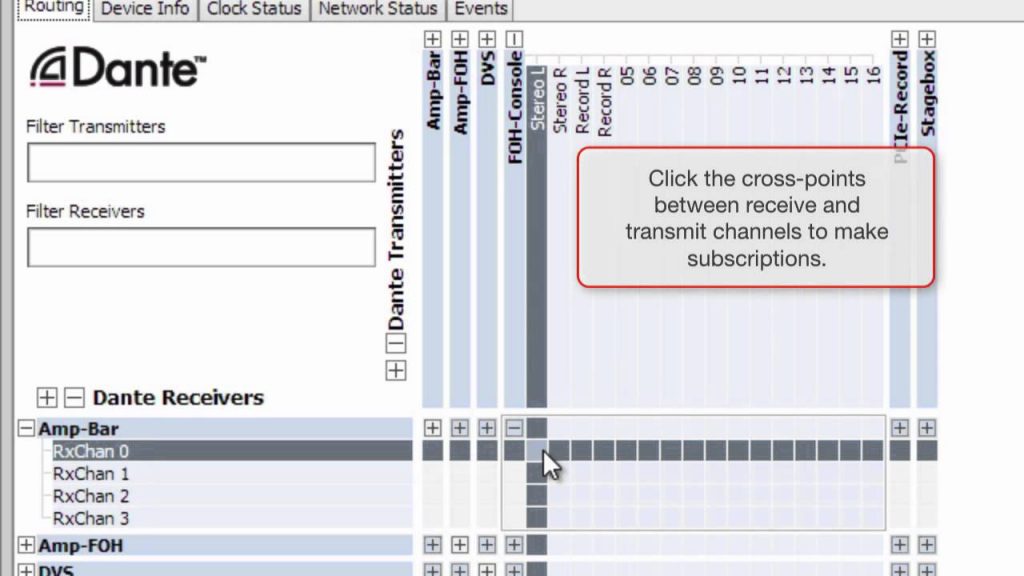
Basic routing can be achieved with the Dante Controller application running on a control workstation such as a Windows 10 PC.
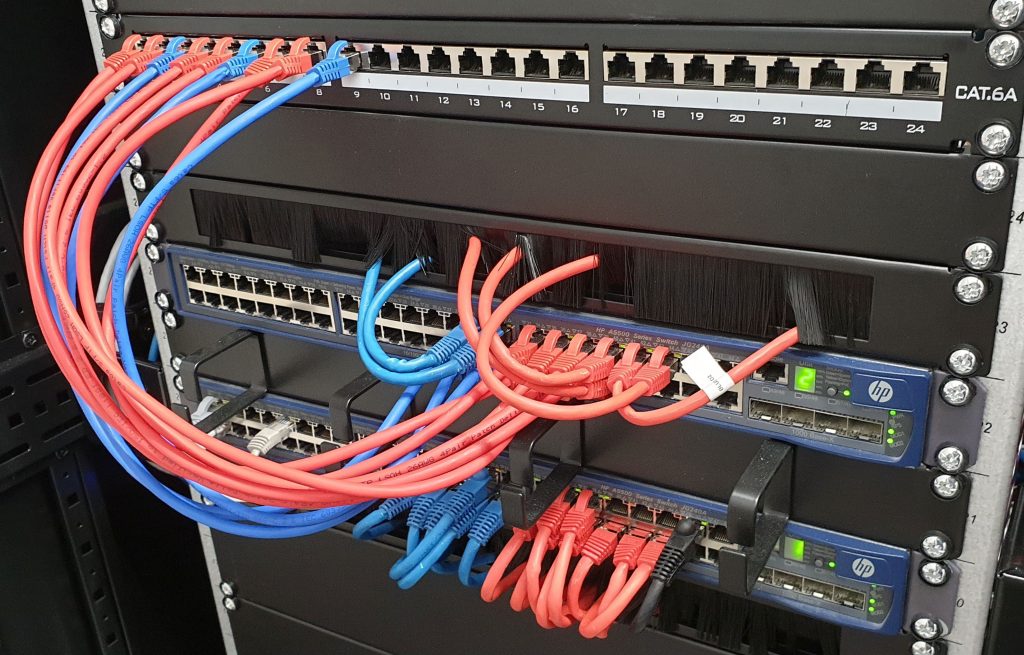
Here we see two Layer 3 network switches clustered in a fault tolerant way to allow Dante primary and Secondary networks to communicate with Dante devices (red cables) with Control networking (blue cables). Primary, Secondary and Control networks are isolated using vlans and protected with firewalls.
Conclusion
Digital equipment is rapidly coming down in price and the advantages far outweigh the disadvantages of needing professional installation. We are specialists in providing complete digital systems including the high availability networking infrastructure needed with remote and wireless access for control and monitoring. Please get in touch with us to discuss your requirements further.